July 09, 2026
OPT-NC Successfully Conducts First Satellite SMS Test Directly to a Mobile Phone
OPT-NC has successfully completed its first satellite mobile connectivity test in New Caledonia in partnership with Lynk Global. This trial enabled the sending and receiving of SMS messages on a mobile phone in an area without terrestrial mobile coverage.
Lynk Global
Lynk is an American company founded in 2017, specializing in satellite communications in low Earth orbit (LEO). It develops Direct-to-Device (D2D) services that allow direct connectivity with standard mobile phones, without any modifications.
A pioneer in its field, Lynk was the first company to send an SMS via satellite to a standard mobile phone. Its technology aims to extend mobile coverage to underserved, rural, or remote areas, particularly in emergency or disaster situations.
Lynk leverages partnerships with satellite operators such as SES and Omnispace to accelerate the deployment of services for operators, businesses, and public sector organizations. ‘
A technology that transforms satellites into mobile network extensions
Direct-to-Device (D2D) satellite technology, also known as Direct-to-Cell (D2C), allows a standard mobile phone to communicate directly with a low-Earth orbit satellite. Unlike traditional satellite solutions, it requires neither a satellite phone nor a specific antenna.
Lynk’s satellites operate on the 900 MHz band, recently freed up following the shutdown of 2G. In the absence of OPT-NC’s terrestrial network coverage, the mobile phone can receive the satellite signal directly, thus maintaining a communication channel.
In the event of dual coverage, the OPT-NC network takes priority over Lynk’s.
The partnership between OPT-NC and Lynk is based on a roaming agreement, eliminating the need for dedicated ground stations and significantly simplifying service implementation.
A successful real-world test in New Caledonia
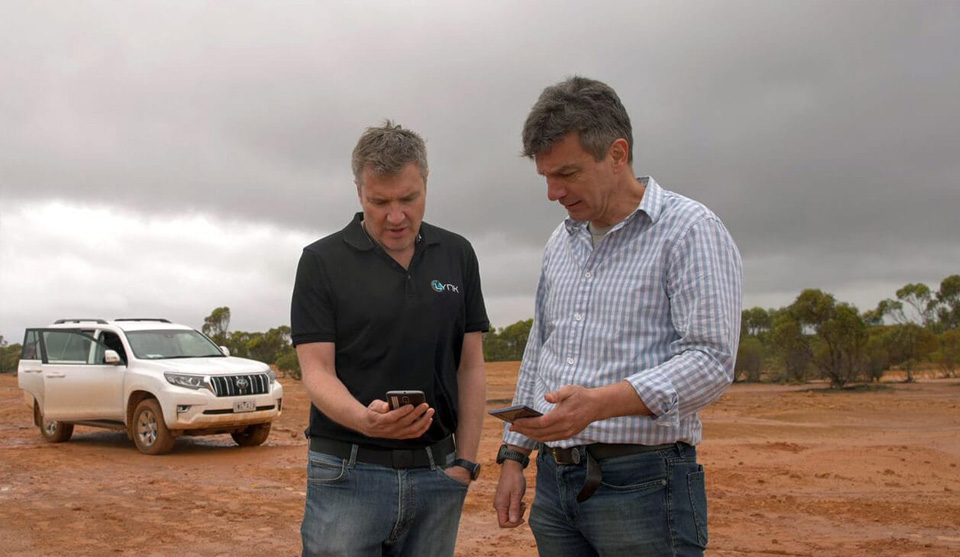
The trial conducted with Lynk Global took place on Plum, in an area without terrestrial mobile coverage. A mobile phone was able to connect directly to a low-Earth orbit satellite operated by Lynk, enabling the sending and receiving of SMS messages.
This success confirms the technical feasibility of a satellite-based mobile messaging service in New Caledonia.
It represents an initial validation step before potentially more advanced phases, particularly those involving mobile data connectivity services.
Preparing a new layer of resilience for mobile communications
At this stage, Direct-to-Device remains an emerging technology, and the tested service does not yet offer 24/7 availability.
Coverage is expected to improve gradually with the strengthening of Lynk’s satellite capacity, with full coverage projected for mid-2027.
For OPT-NC, the challenge is therefore to anticipate this development now. The goal is not to replace the terrestrial mobile network with satellite, but to prepare a complementary connectivity layer capable of providing coverage in areas without terrestrial coverage, during emergencies, or in times of crisis.
This approach also paves the way for new synergies with satellite operators to identify the best use cases for New Caledonia, assess the technical and regulatory conditions for integration, and ultimately strengthen the resilience of communications in the territory.
Next steps
Following this successful initial test, OPT-NC will continue its work with Lynk Global at the end of 2026. A new phase of testing is planned, focusing on mobile data transmission via satellite. The objective will be to go beyond SMS and analyze the performance of a direct-to-mobile data service on standard phones.
With this experiment, OPT-NC confirms its commitment to:
- Anticipate the evolution of mobile networks;
- Strengthen communications resilience;
- Develop connectivity solutions adapted to the geographical and economic realities of New Caledonia.